

Borrowing money is a financial decision that should always be made carefully. Whether you need funds for an emergency, home renovation, education, medical expenses, or a major purchase, choosing the right borrowing option can save you thousands of dirhams over time.
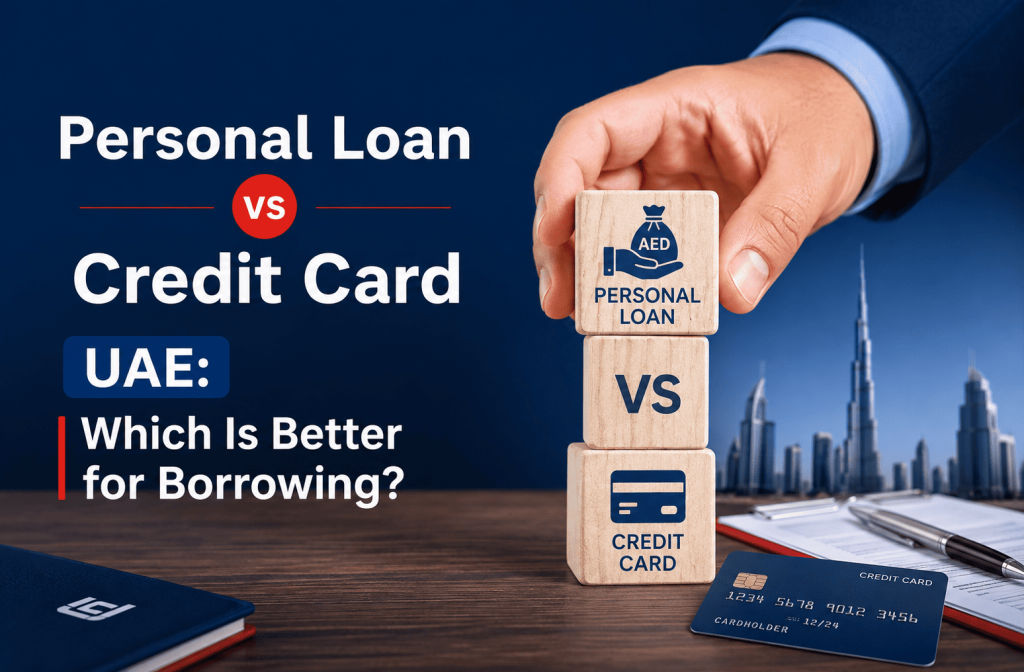
Two of the most common forms of borrowing in the UAE are personal loans and credit cards. While both provide access to funds, they work very differently and are designed for different financial needs.
Many people choose whichever option is readily available without considering interest rates, repayment terms, or long-term financial impact. Unfortunately, this often leads to unnecessary debt, higher monthly repayments, and financial stress.
At Lotus Debt Management, we regularly help individuals who initially relied on credit cards when a personal loan would have been more suitable—or vice versa. Understanding the differences can help you borrow smarter and avoid future financial difficulties.
Understanding Personal Loans
A personal loan is a lump sum borrowed from a bank or financial institution, repaid over a fixed period through equal monthly instalments (EMIs).
Personal loans generally have:
- Fixed repayment schedules
- Lower interest rates than credit cards
- Predetermined loan tenure
- Fixed monthly payments
- Larger borrowing limits
Because the repayment schedule is structured, borrowers know exactly how much they need to pay every month until the loan is fully settled. For planned expenses such as education, weddings, medical treatments, debt consolidation, or home improvements, personal loans are often the more economical choice.
Understanding Credit Cards
Credit cards provide a revolving line of credit that allows you to spend up to your approved limit whenever needed.
Each month, you have two repayment choices:
- Pay the entire outstanding balance
- Pay only the minimum amount due
While paying the full balance avoids interest charges, paying only the minimum due causes interest to accumulate rapidly. Credit cards are designed primarily for:
- Daily purchases
- Online shopping
- Travel expenses
- Short-term borrowing
- Emergency situations
They are not intended to finance long-term expenses over several years. At Lotus Debt Management, one of the most common issues we encounter is individuals using multiple credit cards to cover ongoing expenses, eventually creating a cycle of debt that becomes increasingly difficult to manage. If you are already caught in this situation, our guide on how to settle credit card debt legally and avoid travel bans in Dubai explains the steps you can take.
Interest Rates: Which Costs Less?
One of the biggest differences between personal loans and credit cards is the cost of borrowing.
Personal loans usually offer significantly lower interest rates because they have fixed repayment terms and lower risk for lenders.
Credit cards generally carry much higher annual interest rates. If you do not pay your balance in full every month, interest is charged on the outstanding amount, making borrowing considerably more expensive.
For example: If you need AED 40,000.
With a personal loan, you repay the amount through structured monthly instalments over a fixed period.
If you instead spend AED 40,000 on a credit card and only make minimum payments, the repayment period could stretch for years while interest continues accumulating. This difference can amount to tens of thousands of dirhams in additional borrowing costs.
Flexibility vs Structure
| Credit Cards (Flexibility) | Personal Loans (Structure) |
|---|---|
This flexibility is useful for short-term needs but can easily encourage overspending. |
Provides discipline. Since the loan amount is fixed and repayments follow a structured schedule, borrowers are less likely to accumulate additional debt. Many financial experts recommend structured borrowing for individuals who prefer predictable monthly budgeting. |
Which Option Is Better for Emergencies?
The answer depends on the size of the emergency.
For smaller unexpected expenses, such as urgent repairs or emergency travel, a credit card may be appropriate—provided you can repay the balance quickly. If your situation is triggered by a sudden income disruption, read our guide on what to do after an unexpected job loss or salary cut in the UAE.
For larger expenses, such as:
- Medical treatments
- Family emergencies
- Home renovations
- Major purchases
A personal loan is usually the more affordable solution due to lower interest costs. Before borrowing, Lotus Debt Management helps clients evaluate whether borrowing is necessary using tools like our DBR Calculator and determines which financing option creates the least long-term financial burden.
Impact on Your Credit Score
Both personal loans and credit cards influence your credit profile. Responsible use of either can improve your creditworthiness.
Positive habits include:
- Paying EMIs on time
- Paying credit card bills before the due date
- Keeping credit utilisation low
- Avoiding missed payments
Problems arise when borrowers:
- Max out multiple credit cards
- Miss monthly payments
- Frequently exceed their credit limits
- Take multiple loans simultaneously
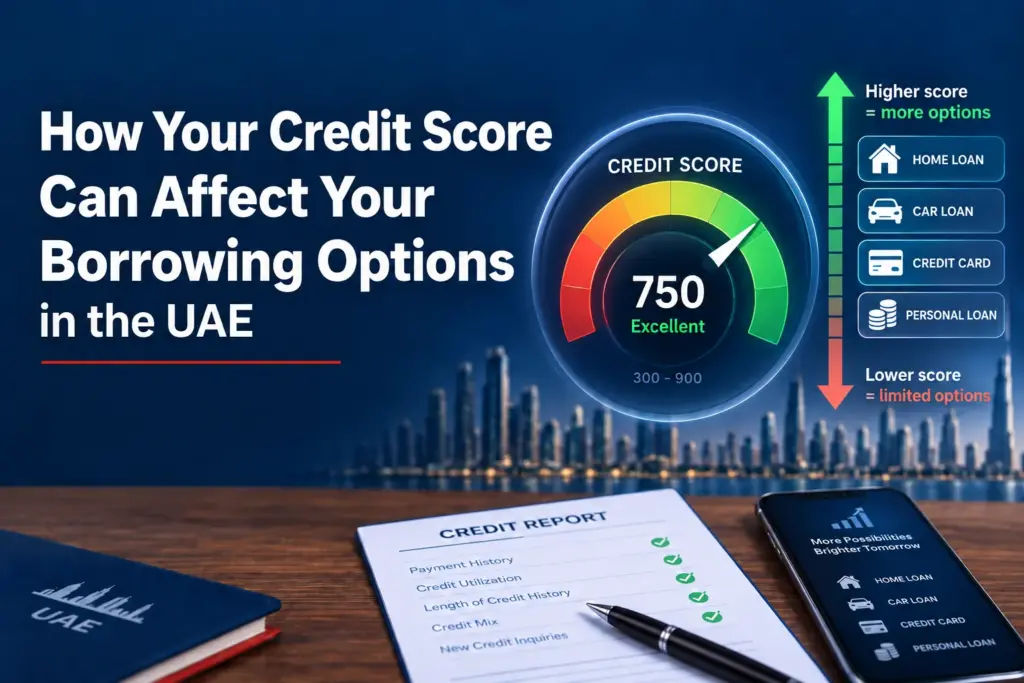
High credit card utilisation is one of the factors that can negatively affect future borrowing opportunities. Lotus Debt Management frequently assists clients through credit counseling to improve their financial profile by helping them reduce outstanding liabilities and establish more manageable repayment plans.
When to Choose Which Option
| When a Personal Loan Makes More Sense | When a Credit Card Is the Better Choice |
|---|---|
The predictability of EMIs also makes budgeting much easier. |
The key is treating the credit card as a payment tool—not a long-term loan. |
Can You Use a Personal Loan to Pay Off Credit Card Debt?
Yes. In fact, many borrowers choose to consolidate high-interest credit card debt into a personal loan.
This approach can offer several advantages:
- Lower overall interest costs
- One fixed monthly payment
- Simplified financial management
- Faster debt repayment
- Reduced financial stress
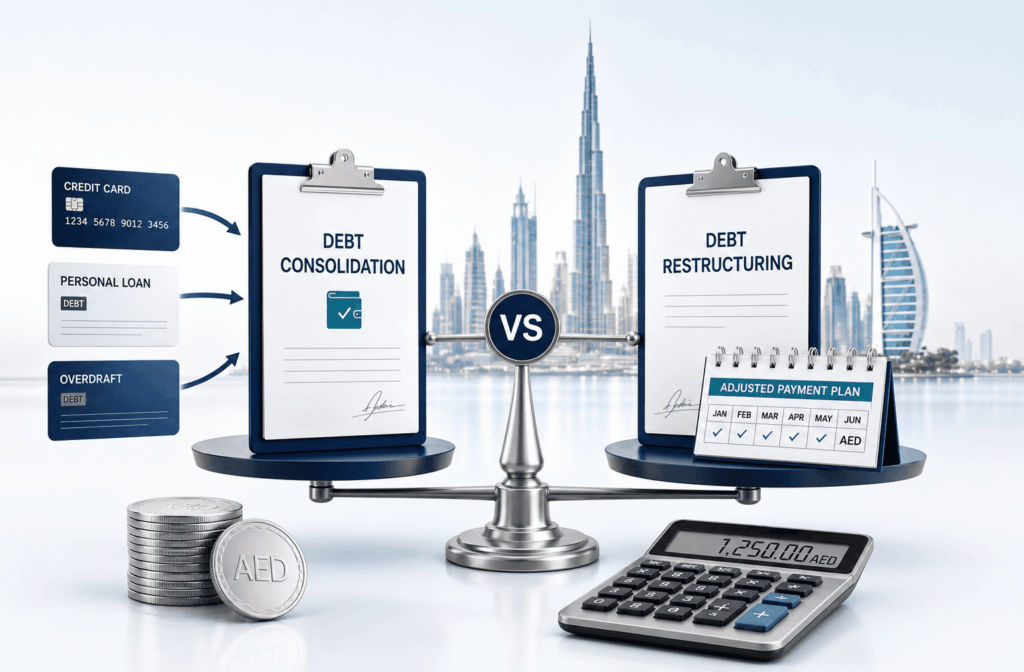
However, debt consolidation should only be done after carefully reviewing affordability and repayment capacity. At Lotus Debt Management, we assess each client’s financial situation and work with lenders to identify suitable restructuring or consolidation solutions where appropriate. To understand the difference between these two approaches, read our comparison of debt consolidation vs debt restructuring in the UAE.
Common Mistakes Borrowers Make
Many financial challenges arise not because people borrow, but because they borrow incorrectly. Some of the most common mistakes include:
- Using credit cards for long-term financing.
- Paying only the minimum amount due every month.
- Taking multiple personal loans simultaneously.
- Ignoring repayment schedules.
- Borrowing without a financial plan—a risk covered in detail in our Ultimate Guide to Debt-Free Living in the UAE.
- Using one credit facility to repay another.
These habits often lead to increasing interest costs and mounting debt. Seeking professional guidance early can help prevent these issues from escalating.
How Lotus Debt Management Can Help
Borrowing decisions should always support your long-term financial wellbeing rather than create additional stress. At Lotus Debt Management, we help individuals across the UAE make informed financial decisions by reviewing their existing liabilities, repayment obligations, and overall financial position.
Depending on your circumstances, our specialists may assist with:
- Reviewing whether a personal loan or credit card is the more suitable option.
- Assessing affordability before taking on additional debt.
- Exploring debt consolidation opportunities.
- Negotiating repayment solutions with lenders where appropriate.
- Developing personalised repayment strategies.
- Helping clients regain financial stability through structured debt management.
Whether you’re considering new borrowing or already struggling with repayments, obtaining professional advice early can significantly improve your financial outcome. Contact Lotus Debt Management today for a free consultation.
Frequently Asked Questions (FAQs)
Is a personal loan cheaper than using a credit card?
Yes, in almost all scenarios involving medium-to long term borrowing. Personal loans offer fixed, lower interest rates and structured repayment terms. Credit cards charge high compounding interest rates (often over 36% per annum) if the balance is not cleared in full every billing cycle.